Source irregular glass fruit plate for parties, homes, and outdoor events
Compare 30 listings for irregular glass fruit plate options from Chinese manufacturers. Buyers can evaluate features like eco-friendly design, high white pyrex glass quality, and various packing methods to find suitable kitchenware for baking, microwaving, or serving.
Key considerations
Products List






Comprehensive Sourcing Guide
Strategic Sourcing Guide for Irregular Glass Fruit Plates
The global market for glass kitchenware and serving ware continues to expand, driven by consumer demand for durable, aesthetically pleasing, and eco-friendly dining solutions. When sourcing irregular glass fruit plates, buyers must navigate a complex landscape of material science, regulatory compliance, and supply chain logistics. Unlike standard round or square plates, irregular designs introduce unique challenges in manufacturing consistency, packaging, and quality control. This guide provides a disciplined approach to evaluating suppliers and products, relying strictly on verified product attributes and established industry standards to ensure a successful procurement outcome.
Understanding Material Composition and Physical Attributes
The foundation of any high-quality glass fruit plate lies in its material composition. In the current market, the dominant material for this category is glass, specifically formulated for kitchenware applications. Buyers should prioritize products labeled as "High White Pyrex Glass" or "High White Glass," as these designations often indicate a borosilicate or tempered soda-lime glass formulation capable of withstanding thermal shock. The observed product data confirms that "High White Pyrex Glass" is a specific attribute available in the supply chain, suggesting a premium tier of material that offers superior clarity and resistance to breakage compared to standard glass.
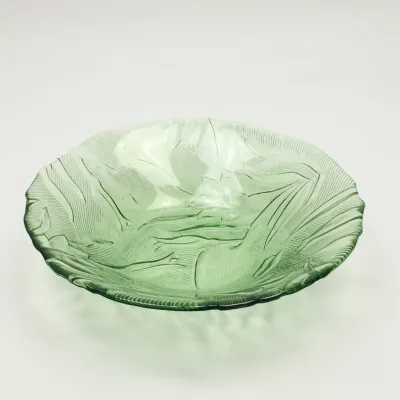
The physical characteristics of the plate are equally critical. While the core keyword specifies "irregular," the product listings reveal that "Round" and "Unicolor" or "Transparent" finishes are common variations. The "Transparent" attribute is essential for fruit plates, as it allows the natural color of the fruit to be the focal point, enhancing the visual appeal of the serving presentation. Furthermore, the "Eco-Friendly" feature is a recurring attribute in the data, indicating that many manufacturers are aligning with sustainability trends by producing reusable, non-disposable items. It is important to note that while "Disposable" is listed as "Non-Disposable" in the provided facts, buyers must verify the specific durability claims for their intended use case, whether it is for high-volume catering or residential use.
The dimensions of the plate vary significantly based on the specific model. For instance, one observed specification lists a height of 108mm with a top diameter of 225mm and a bottom diameter of 107mm. Another model references a capacity or size standard of "1300ml." When sourcing irregular shapes, buyers must be cautious with standard measurements, as the "irregular" nature of the design may make uniform diameter or volume calculations difficult. Therefore, relying on specific model numbers like "TM-GP031802," "GP001," or "GB2315-6" is crucial for ensuring that the physical dimensions match the buyer's inventory requirements.
Compliance and Certification Verification
In the food contact industry, regulatory compliance is not optional; it is a prerequisite for market entry. The provided product facts highlight several critical certifications that buyers should verify during the supplier evaluation process. The most frequently cited certifications include CE/EU, FDA, SGS, LFGB, and CIQ. These represent distinct regulatory frameworks: FDA compliance is essential for the United States market, while CE/EU and LFGB are mandatory for European Union sales. SGS and CIQ (China Inspection and Quarantine) serve as third-party verification bodies that validate the safety and quality of the glass.
A specific observation in the data notes a "Pass Food Grade" certificate, which is a fundamental requirement for any item intended to hold food. Additionally, the "High White Pyrex Glass" attribute often correlates with specific thermal and chemical resistance standards, though buyers should not assume this without seeing the test report. The "ISO9000" standard is also mentioned in the product data, indicating that the manufacturer adheres to international quality management systems. When evaluating a supplier, buyers should request copies of these certificates and verify their validity dates. It is vital to ensure that the certification covers the specific model number being ordered, as certifications are often tied to specific production batches or product lines.
Cost Drivers and Pricing Structures
The pricing of irregular glass fruit plates is influenced by a combination of material costs, manufacturing complexity, and order volume. The observed price range in the market spans from $0.20 to $45.27 USD. This wide variance suggests that the market includes both mass-produced, simple designs and highly customized, premium items. The lower end of the spectrum likely corresponds to basic, transparent glass plates with minimal customization, while the higher end may reflect complex irregular shapes, specialized "High White Pyrex" formulations, or custom branding.
Order volume plays a significant role in determining the final unit cost. The observed Minimum Order Quantity (MOQ) ranges from 1 to 10,000 units. Some suppliers offer an "MOQ: Stock" option, allowing for smaller trial orders, while others require a commitment of 500 pieces or more. For buyers seeking irregular designs, the MOQ might be higher due to the specialized tooling required to create non-standard molds. Additionally, the "Customization" attribute is available, which can increase costs. Customization may involve specific colors, printing techniques (such as the "Printing" craft noted in the data), or unique shapes that deviate from standard inventory.
Packaging is another significant cost driver. The data shows various packing configurations, including "72PCS/Master Carton," "Bulk Packing," "6PCS/Bulk Pack," and "1PCS/Color Box, 12PCS/Carton." The choice of packaging affects the shipping cost and the final landed price. Fragile glass items, especially irregular ones, require robust packaging to prevent breakage during transit. Suppliers offering "Brown Box Packing" or "Color Box" may charge a premium for the added protection and retail-ready presentation. Buyers should calculate the total landed cost, including packaging and freight, rather than focusing solely on the unit price.
Typical Applications and Usage Scenarios
Irregular glass fruit plates are versatile and find applications across various sectors. The product data explicitly lists usage scenarios such as "Party," "Outdoor," "Home," "Oven," "Microwave," "Kitchenware," and "Bakeware." This indicates that these plates are not merely decorative but are functional items designed for active use. The "Dishwasher Safe: Yes" attribute confirms that the glass is durable enough to withstand repeated washing cycles, making them suitable for commercial kitchens and high-traffic households.
The "Eco-Friendly" characteristic aligns with the trend toward reusable tableware, positioning these plates as a sustainable alternative to single-use plastic or paper products. In a commercial setting, such as a restaurant or event venue, the irregular shape can serve as a unique selling point, adding an artistic touch to the dining experience. The "Transparent" and "Unicolor" options allow for a clean, modern aesthetic that complements a wide range of interior designs. However, buyers should verify the thermal limits if the plates are intended for oven or microwave use, as not all glass formulations are suitable for high-temperature applications. The "High White Pyrex Glass" designation is a strong indicator of thermal resistance, but specific temperature limits should be confirmed with the supplier.
Supplier Evaluation and Geographic Considerations
When selecting a supplier for irregular glass fruit plates, geographic origin and logistical capabilities are key factors. The product data indicates that manufacturers are located in various regions of China, including "Shangdong," "Shandong," "Guangzhou," "Guangdong," and "Shanxi." Each region may have different strengths in terms of manufacturing expertise and supply chain efficiency. For example, suppliers in "Guangdong" and "Shandong" are known for their glassware production capabilities, while "Shanxi" may offer competitive pricing for bulk orders.
The "Lead Time" is another critical metric for procurement planning. The observed lead times range from 40 to 45 days. This duration can vary based on the complexity of the order, the availability of raw materials, and the current production schedule. Buyers should account for this lead time when planning inventory replenishment, especially for custom orders. The "Loading Port" is listed as "Nanjing, China" for some products, which is a major inland port connected to the Yangtze River, facilitating efficient export logistics.
Suppliers also offer "Sample" support, which is invaluable for quality verification before committing to a large order. The "Customized" attribute suggests that many manufacturers are willing to work with buyers to create unique designs. However, buyers should be prepared for the potential for higher costs and longer lead times associated with customization. It is advisable to request samples of the specific irregular shape and finish to ensure that the product meets the buyer's quality expectations.
Quality Control and Long-Term Procurement Strategy
Ensuring consistent quality is paramount when sourcing irregular glass products. The "Quality: High White Pyrex Glass" and "Quality: High White Glass" attributes suggest a focus on clarity and purity, but buyers must implement their own quality control measures. This includes inspecting the finished goods for defects such as bubbles, scratches, or uneven edges, which are more common in irregular shapes. The "SGS" standard and "ISO9000" certification provide a baseline for quality management, but on-site inspections or third-party testing may be necessary for large orders.
For long-term procurement, buyers should establish a relationship with suppliers who offer "Customization" and "Stock" options. This flexibility allows for a balanced inventory strategy, where core items are kept in stock for immediate delivery, while custom items are produced on demand. The "Brand: Garbo" is mentioned in the data, indicating that some suppliers may offer private labeling or branded products. Buyers should clarify the branding requirements early in the negotiation process to avoid confusion.
Finally, buyers should consider the environmental impact of their procurement decisions. The "Eco-Friendly" feature and the "Non-Disposable" nature of the product align with global sustainability goals. By choosing durable, reusable glass plates, buyers can reduce waste and enhance their brand image. However, the energy-intensive nature of glass manufacturing means that buyers should also inquire about the supplier's environmental practices and energy efficiency measures.
In conclusion, sourcing irregular glass fruit plates requires a meticulous approach that balances material quality, regulatory compliance, cost efficiency, and logistical reliability. By leveraging the verified attributes and standards found in the market data, buyers can make informed decisions that ensure the delivery of high-quality products that meet the demands of their customers. The key to success lies in thorough supplier evaluation, clear communication of requirements, and a commitment to maintaining high standards of quality and sustainability throughout the supply chain.
FAQs
What certifications are required for irregular glass fruit plates?
Products typically carry CE/EU, FDA, SGS, LFGB, and CIQ certifications. These verify compliance with food safety standards for international markets. Buyers should request specific certificates for the model number to ensure validity.
Can I customize the design of irregular glass fruit plates?
Yes, customization is available for these glass kitchenware items. Suppliers offer options for specific shapes, colors, and printing crafts. Custom orders may require higher minimums and longer lead times than stock items.
What is the typical lead time for manufacturing irregular glass plates?
Lead times generally range from 40 to 45 days for production. This duration depends on order volume and whether the design is custom or stock. Buyers should plan inventory replenishment around these specific timeframes.
Which material grades are used for high-quality irregular glass plates?
High White Pyrex Glass and High White Glass are common material grades. These formulations offer superior clarity and resistance to thermal shock compared to standard glass. They are suitable for use in ovens and microwaves.
What are the minimum order quantities for irregular glass fruit plates?
Minimum order quantities vary from 1 unit for stock items to 10,000 units for bulk orders. Some suppliers require a specific MOQ of 500 pieces for custom designs. Stock availability allows for smaller trial orders.
How are irregular glass fruit plates typically packaged for shipping?
Packaging options include bulk packs, color boxes, and master cartons. Specific configurations like 72 pieces per master carton or 1 piece per color box are available. Robust packaging is essential to prevent breakage during transit.
Where are the primary manufacturing locations for these glass products?
Manufacturers are located in regions such as Shandong, Guangdong, Guangzhou, and Shanxi in China. These areas have established glassware production capabilities. The loading port for some products is Nanjing, China.